HENRY 2KD-3 Linear Amplifier Instruction Manual Hf English
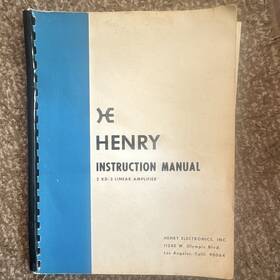
( Brand: Henry ), ( Manufacturer Part Number: 2KD-3 ), ( Model: 2KD-3 LINEAR AMPLIFIER ), ( Month: June ), ( Type: Manual ), ( Language: English ), ( Era/year: 1964 ), ( Band: Hf ), ( Features: Vintage ), ( Subject: Linear Amplifier )
Review HENRY Linear Amplifier Instruction Manual Hf June Vintage English
The **Henry 2KD-3 Linear Amplifier Instruction Manual (HF, 1964, English)** is a meticulously preserved technical guide that offers an unparalleled window into the design, operation, and maintenance of one of the most iconic and influential linear radio frequency amplifiers of the mid-20th century. Originally published in 1964, this manual was crafted for engineers, radio enthusiasts, and broadcast professionals who relied on the 2KD-3 s exceptional performance to amplify high-frequency signals with remarkable efficiency and fidelity. The amplifier, renowned for its robust construction and innovative tube-based circuitry, was a staple in amateur radio stations, shortwave broadcasting facilities, and experimental electronics labs, where its ability to deliver up to **2,000 watts of continuous-duty power** across the HF spectrum (1.8 to 30 MHz) made it indispensable. The accompanying manual is a treasure trove of detailed technical specifications, circuit diagrams, and step-by-step instructions, ensuring users could fully harness the amplifier s capabilities while minimizing risks associated with high-voltage and high-power operation.
The instruction manual begins with a comprehensive **introduction** that contextualizes the 2KD-3 s role in the evolving landscape of radio communication, emphasizing its suitability for both amateur and professional applications. It then delves into the **technical specifications**, providing precise details on power output, frequency range, input/output impedance, tube requirements (including the iconic **4CX250B** power tetrode and supporting components like the **6146** driver tube), and cooling requirements. The manual s **circuit diagrams** are particularly noteworthy, offering clear, annotated schematics that illustrate the amplifier s multi-stage design, including the driver stage, power amplifier stage, and associated biasing and protection circuits. These diagrams are accompanied by **detailed component layouts**, ensuring users can accurately replicate the amplifier s construction or troubleshoot issues with confidence.
A standout feature of the manual is its **detailed operating instructions**, which guide users through the amplifier s setup, tuning, and adjustment processes with meticulous clarity. It covers everything from **initial power-up procedures** including safety precautions for handling high-voltage components to **tuning techniques** for optimal performance across different frequency bands. The manual also addresses common operational challenges, such as **tube aging, thermal management, and impedance matching**, providing practical solutions to maintain reliability. Additionally, it includes a **troubleshooting section**, offering systematic diagnostic steps to identify and resolve issues ranging from **low power output** to **tube failures or circuit malfunctions**, making it an invaluable resource for both novices and experienced technicians.
Beyond its technical content, the manual reflects the **engineering ethos of the 1960s**, where reliability, durability, and precision were paramount. The language is precise yet approachable, assuming a foundational understanding of electronics but providing enough context for those new to high-power amplifier design. The **appendices** further enhance its utility, offering supplementary information such as **tube replacement guides, wiring diagrams for external connections, and safety guidelines** to prevent damage to the amplifier or surrounding equipment. For collectors, historians of technology, and modern electronics enthusiasts, this manual is not merely an instruction book but a **historical artifact** that encapsulates the ingenuity of mid-century radio engineering.
Whether you are restoring a vintage 2KD-3 amplifier, studying its design for educational purposes, or simply appreciating the craftsmanship of an era when analog electronics reigned supreme, this manual serves as an essential companion. Its **detailed, no-nonsense approach** ensures that users can fully exploit the amplifier s potential while adhering to best practices for safety and longevity. For those with an interest in the evolution of radio technology, the Henry 2KD-3 and its accompanying manual represent a pivotal milestone a testament to the era s commitment to pushing the boundaries of wireless communication.
### **Pros and Cons of buying a Henry 2KD-3 Linear Amplifier (1964, English Manual)**
#### **Pros**
1. **Historical and Collectible Value**
The Henry 2KD-3 is a classic linear amplifier from the mid-20th century, originally designed for high-power radio broadcasting and amateur radio use. Its age and rarity make it a desirable piece for collectors, especially those interested in vintage electronics. The English instruction manual adds to its appeal for enthusiasts in English-speaking regions.
2. **High Power Output**
As a 2-kilowatt linear amplifier, it was built for demanding applications, including high-frequency (HF) radio transmission. This makes it useful for serious amateur radio operators (hams) who require reliable, high-power amplification for long-distance communication.
3. **Durability and Robust Construction**
Vintage amplifiers like the 2KD-3 were often constructed with high-quality components designed for longevity. While wear and tear may be present, the amplifier could potentially be restored or repurposed for modern use with the right modifications.
4. **Educational Value**
Studying and restoring this amplifier provides hands-on experience with analog electronics, vacuum tubes, and linear amplification techniques. It can be a valuable learning tool for engineers, hobbyists, or students interested in radio technology.
5. **Potential for Restoration and Customization**
With proper research and expertise, the amplifier could be refurbished to work with modern equipment. Some enthusiasts modify vintage amplifiers to suit contemporary needs, such as interfacing with digital radios or power supplies.
6. **Community and Enthusiast Appeal**
Owning a piece of radio history can connect you to a community of vintage electronics hobbyists. There are forums, clubs, and markets dedicated to restoring and using classic amplifiers like the 2KD-3.
---
#### **Cons**
1. **Age and Potential Wear**
The amplifier is over 60 years old, which means it may suffer from degraded components, corrosion, or mechanical failure. Tubes, capacitors, and wiring could be worn out, requiring significant restoration work before it functions properly.
2. **Lack of Modern Compatibility**
The 2KD-3 was designed for analog systems and may not be directly compatible with modern digital radios, synthesizers, or power supplies. Adapters, modifications, or external interfaces may be necessary, which could be complex or costly.
3. **High Maintenance Requirements**
Vacuum tube amplifiers like this one require regular maintenance, including tube replacements, alignment, and cooling system checks. Tubes degrade over time and must be sourced, which can be difficult and expensive.
4. **Safety Risks**
High-power amplifiers carry risks of electrical shock, fire, or damage to connected equipment if not handled properly. The user must have a strong understanding of electronics and safety protocols to operate it safely.
5. **Limited Availability of Parts and Manuals**
While the English manual is a plus, finding replacement parts (especially original or high-quality vintage components) can be challenging. Modern equivalents may not be exact matches, leading to compatibility issues.
6. **Cost of Restoration**
Restoring the amplifier to working condition could be expensive, especially if professional help is required. Labor, parts, and testing equipment add up quickly, potentially making it more cost-effective to purchase a modern amplifier instead.
7. **Legal and Regulatory Considerations**
Operating a high-power amplifier may require compliance with local radio regulations, including licensing (for amateur radio use) and frequency restrictions. Failure to adhere to these rules could result in fines or legal issues.
---
### **Conclusion**
The Henry 2KD-3 is a fascinating piece of radio history with significant appeal for collectors, hobbyists, and enthusiasts. Its high power output and educational value make it a unique asset, but its age, maintenance demands, and compatibility issues present substantial challenges. Whether purchasing it for restoration, historical interest, or practical use depends on your technical expertise, budget, and willingness to invest time in bringing it back to life.
If you are an experienced electronics technician with access to tools, parts, and patience, the 2KD-3 could be a rewarding project. However, if your primary goal is reliable modern performance, a newer linear amplifier may be a more practical choice.
### **Recommendation**
- **Buy it if:** You are passionate about vintage electronics, have the skills to restore it, and are willing to invest time and money in bringing it back to working order. Consider joining forums or communities (e.g., ARRL, eHam) for guidance on restoration.
- **Avoid it if:** You lack experience with high-power amplifiers, cannot commit to the restoration process, or prioritize convenience and modern functionality over historical value.
- **Alternative Approach:** If you want a similar high-power amplifier but with modern convenience, consider newer models like the **Amateur Built 2K-3000** or **Icom IC-AT5000** (for lower power but easier use). For educational purposes, a well-documented vintage amplifier like the **Hallicrafters SX-110** (a receiver) might be a more manageable project.
Ultimately, the 2KD-3 is a remarkable piece of technology, but its value lies as much in the journey of restoration as in its final functionality.
Details:
part #: 2kd3 price
- $39.99
specifications radiomanumag:
- brand: Henry
- mpn: 2kd-3
- model: 2kd-3 Linear Amplifier
- month: June
- type: Manual
- language: English
- era/year: 1964
- band: Hf
- features: Vintage
- subject: Linear Amplifier
general radiomanumag:
- condition: Good
- Radio Communication > Parts Accessories > Manuals Magazines
returns radiomanumag:
- policy: No Returns
payments radiomanumag:
- credit card: Diners-club
- wallet: Apple-pay
- other
shipping radiomanumag:
- transit: 4-12 Days
- carrier: USPS
- type: Calculated
- service: USPS Ground Advantage
- class: Standard
- cost: $6.07
offer radiomanumag:
- options: Ship-to-home
- quantity: 1
- availability: In Stock
- best offers: True
- started: May 18, 2026
- sold: 0
seller radiomanumag:
- city: Raeford, North Carolina
- rating: 100.0%
- # reviews: 2
Henry 2KD-3 Is Similar To:
- Henry Radios Cs15 Radio Tempo Vhf Fm Hand Held Transceiver Operating Service Manual (32.7% similar) Please review all the photos. Photocopy, no hi-liter/stains/taping inside. Henry radio operating service manual, tempo CS15 vhf FM handheld transceiver, with 15 schematic, coming from estate sale...(February 28th, 2026)
- Tempo Fmh-42 Henry Radio Uhf Fm Transceiver Manual (27% similar) Please review all the photos. Henry radio manual, tempo FMH-42 uhf/FM transceiver instruction manual, coming from estate sale. Photocopy, no hi-liter/stains/taping inside...(February 28th, 2026)