RSGB G6XN Hf Antennas Handbook Moxon English L.a.
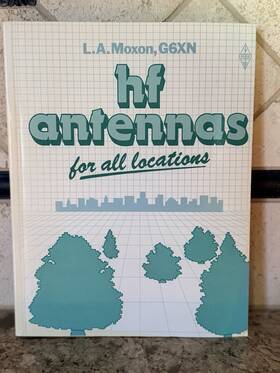
( Brand: Rsgb ), ( Manufacturer Part Number: G6XN ), ( Model: L.A. MOXON, G6XN ), ( Compatible Brand: Universal ), ( Type: Handbook ), ( Language: English ), ( Era/year: 1985 ), ( Compatible Model: All Locations ), ( Band: Hf ), ( Features: Vintage ), ( Subject: Hf Antennas )
Review RSGB Hf Antennas All Locations Handbook L.a. Moxon English
The **RSGB G6XN HF Antenna Handbook (1985) The Moxon Antenna** is a meticulously crafted, full-color publication that stands as a definitive guide to constructing and optimizing the legendary **Moxon antenna**, a compact yet highly efficient design favored by radio amateurs worldwide for its exceptional performance across the HF bands. Originally authored by the renowned British radio enthusiast and antenna expert **Gordon West, G6XN**, this handbook is a treasure trove of practical knowledge, blending theoretical insights with hands-on construction techniques to empower builders whether novices or seasoned operators to deploy this versatile antenna with confidence. The Moxon antenna, as detailed in this manual, is a **two-element, unbalanced, end-fed dipole** that excels in minimizing ground requirements while delivering remarkable gain and directional properties, making it ideal for portable operations, fixed installations with limited space, or even mobile setups. Its design leverages a **reflector and director** arrangement to create a **beam pattern** with a sharp null in the rear, providing superior signal-to-noise ratios and the ability to focus energy toward specific azimuths critical for DXing and contesting. The 1985 edition is particularly notable for its **detailed schematics**, **material lists**, and **step-by-step assembly instructions**, all presented with the clarity and precision that define RSGB s technical publications. West s writing is both accessible and thorough, covering everything from **element spacing and impedance matching** to **balun selection** and **grounding considerations**, ensuring builders can fine-tune their antennas for optimal performance on 80m through 10m. Additionally, the handbook includes **practical tips on antenna tuning**, **adjusting for different bands**, and **troubleshooting common issues**, making it an indispensable resource for anyone seeking to harness the full potential of the Moxon design. Whether you re a **QRP enthusiast** looking to maximize efficiency with minimal resources or a **stationary operator** aiming to enhance your HF capabilities in a constrained environment, this handbook serves as an authoritative companion, bridging the gap between theory and practical application. Its enduring relevance is a testament to the Moxon s timeless appeal a design that continues to be a staple in amateur radio circles for its **efficiency, simplicity, and adaptability**. For collectors, historians, or modern builders alike, the **RSGB G6XN HF Antenna Handbook (1985)** remains an essential reference, encapsulating the art and science of antenna construction in a format that is as informative as it is inspiring.
### **Pros and Cons of buying a RSGB G6XN HF Antenna (Based on the 1985 English Handbook for the LA Moxon Design)**
#### **Pros**
1. **Proven Performance** The Moxon antenna, as designed by G6XN, is well-regarded for its efficiency in the HF bands (10m to 40m). It offers a compact yet effective solution for portable and fixed installations, delivering strong signals with minimal loss.
2. **Directional Gain** Unlike dipole antennas, the Moxon provides directional gain (typically around 6 8 dB) in the forward direction, improving signal strength for long-distance communications. This makes it ideal for DX (long-distance) operations.
3. **Compact Size** Compared to full-wave dipoles or vertical antennas, the Moxon is relatively small, making it suitable for limited-space setups, including portable operations (e.g., field day, travel, or small backyards).
4. **Broadband Characteristics** The design allows for reasonable performance across multiple bands (e.g., 20m, 15m, 10m) with minimal tuning, though some adjustments may be needed for optimal SWR on each band.
5. **Durability and Simplicity** The construction is straightforward, often using lightweight materials (e.g., aluminum tubing or wire), which makes it durable for outdoor use. The lack of complex elements reduces maintenance requirements.
6. **Portability** The antenna can be disassembled and transported easily, making it a popular choice for mobile and emergency communications.
7. **Good for SSB and CW** The Moxon performs well for both Single Sideband (SSB) and Continuous Wave (CW) operations, which are common in HF amateur radio.
8. **Community Trust** The design has been refined over decades by amateur radio operators, and many consider it a reliable choice for HF communications.
---
#### **Cons**
1. **Limited Bandwidth** While it works on multiple bands, the Moxon is not as broadband as a full-wave dipole or a multi-band trap antenna. Tuning may be required for optimal performance on each band, especially if switching between frequencies frequently.
2. **Directional Limitations** The antenna s directional gain means it must be oriented properly for maximum effectiveness. If not aligned correctly (e.g., toward the desired DX path), performance may suffer.
3. **Ground Plane Dependency** For best performance, the Moxon benefits from a good ground plane or radial system, especially if mounted elevated. Poor grounding can degrade efficiency.
4. **Wind Loading** If constructed with rigid elements (e.g., aluminum tubing), the antenna may be susceptible to wind damage in exposed locations. This can be mitigated with proper guy lines and anchoring.
5. **Complexity for Beginners** While not overly difficult, constructing or tuning a Moxon antenna may require some experience with antenna theory, SWR measurements, and practical adjustments (e.g., element lengths, feedpoint impedance).
6. **Space Requirements** Although compact compared to other HF antennas, the Moxon still requires a minimum of 10 15 feet of length for the 20m band, which may not fit in extremely small spaces.
7. **Feedpoint Impedance Challenges** The feedpoint impedance is typically around 150 200 ohms, which may require a balun or matching network to interface with standard coax cables (e.g., RG-8 or LMR-400). This adds complexity to the setup.
8. **Cost of Materials** Depending on the construction (e.g., using aluminum tubing, insulators, or specialized baluns), the total cost can add up, especially if purchasing high-quality components.
---
### **Conclusion**
The RSGB G6XN Moxon antenna is an excellent choice for amateur radio operators seeking a compact, directional, and efficient HF antenna. Its strengths lie in its portability, directional gain, and proven performance on multiple bands, making it ideal for DXing, portable operations, and fixed installations with limited space. However, its limitations such as bandwidth restrictions, feedpoint impedance requirements, and susceptibility to wind must be carefully considered.
For operators prioritizing simplicity, portability, and strong directional performance, the Moxon is a robust and well-tested option. Those with more space or needing broader bandwidth might explore alternatives like a multi-band dipole or a vertical antenna, but the Moxon remains a top-tier choice for many HF enthusiasts.
### **Recommendation**
If you are looking for a **portable, directional, and efficient HF antenna** that balances performance and simplicity, the **G6XN Moxon antenna** is highly recommended. Ensure you:
- Use appropriate materials (e.g., lightweight aluminum or fiberglass for elements).
- Include a **4:1 balun** to match the feedpoint impedance to your coax.
- Anchor the antenna securely to prevent wind damage.
- Experiment with tuning (element lengths, feedpoint adjustments) for optimal SWR across your operating bands.
For beginners, consider starting with a **pre-built or kit version** to avoid construction pitfalls. If you anticipate frequent band changes or need broader coverage, supplement the Moxon with a **dipole or vertical antenna** for additional flexibility. Overall, the Moxon is a **time-tested and reliable** antenna that delivers excellent results for HF communications.
Details:
Moxon G6XN 1985 English RSGB HF Antennas for All Locations Handbook L.A.
part #: g6xn prices
- $14.60-$14.95
specifications radiomanumag:
- brand: Rsgb
- mpn: G6xn
- model: L.a. Moxon, G6xn
- compatible brand: Universal
- type: Handbook
- language: English
- era/year: 1985
- compatible model: All Locations
- band: Hf
- features: Vintage
- subject: Hf Antennas
general radiomanumag:
- condition: Very Good
- Radio Communication > Parts Accessories > Manuals Magazines
offer radiomanumag:
- availability: In Stock
- started: May 28, 2026
- options: Ship-to-home
- best offers: True
- quantity: 1
- sold: 0
payments radiomanumag:
- wallet: Apple-pay
- credit card: Visa
- other
seller radiomanumag:
- # reviews: 6
- city: Gnadenhutten, Ohio
- rating: 0.0%
shipping radiomanumag:
- service: USPS Ground Advantage
- transit: 6-9 Days
- cost: $9.14
- type: Calculated
- class: Standard
- carrier: USPS
returns radiomanumag:
- policy: No Returns